Finding the Dementia Support Programs You Need Caring for someone living with dementia is challenging on so many levels. For most of us, there are aspects to providing care that require skills, training and education we feel we just don’t have. There are aspects to disease education and managing behaviors that are difficult to know. And there is also the stress and strain of providing care -- which for many of us is something we do on top of working and having a family of our own. Read more
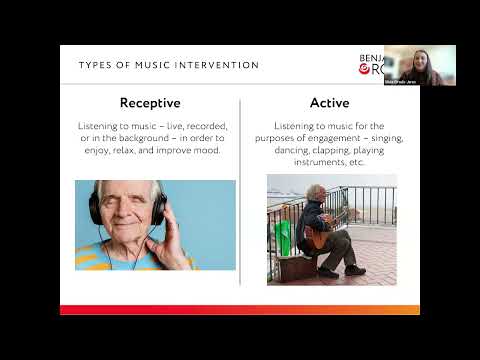
Every Time I Hear That Song: The Impact of Music Intervention on Persons Living with Dementia This webinar discusses the benefits of using music as a tool to engage persons with dementia. Music, which can elicit memories and positive feelings in those with dementia, has the potential to decrease anxiety and the occurrence of agitated behaviors. In recent years, a variety of individualized music interventions have been developed that capitalize on the use of music as a promising practice. The use of familiar music can be a powerful way to tap into an individual’s long-term memory, increase social interaction, produce positive mood, and promote feelings of belonging. Silvia Orsulic-Jeras of Benjamin Rose and Gregg Gorzelle of Hopeful Aging, LLC discuss the Making Connections through Music intervention, a program consisting of six individually themed sessions containing songs and corresponding discussion points that have been carefully selected with the assistance of a board-certified music therapist. Materials, such as handheld percussion instruments, photos and other props, are used to elicit engagement with the music and increase socialization among group members. Read more
Why Assessment is More Effective When It’s Conducted Over Time Many people take the term “assessment” to be the first phase of a diagnostic or treatment program. But in the case of a comprehensive, long-term caregiver support program, assessment is actually much more effective when it’s treated as an ongoing process. Through multiple clinical trials conducted with BRI Care Consultation, Benjamin Rose Institute on Aging’s evidence-based care-coaching program, we've learned that it takes time to identify and uncover all the areas of need within a caregiving environment, and that many needs are missed when using a one-and-done assessment model. Read more
How the Care-Coaching Model Empowers Caregivers Providing care for an older family member or friend isn’t something most people are prepared to do. Many individuals who find themselves in a family caregiver role weren’t expecting to take on such responsibility, and they often lack the time, knowledge or tools to do everything they feel they need to do. Read more
Family Caregivers are Stressed, Tired—and in Your Workforce Programs that provide support for employees serving as family caregivers are emerging as a critical employee benefit option, particularly as providers focus on addressing the full scope of emotional and mental health considerations. Read more
Annual Caregiving Conference: Engaging Caregivers in Evidence-Based Programs The conference explores successes and challenges in the dissemination of evidence-based programs to family and friend caregivers. Keynote speaker, Erin Long, MSW, Team Lead, Alzheimer's Disease Programs Initiative of the Administration for Community Living, discusses experiences with engaging caregivers in programs and services, along with marketing strategies. Presentations also highlight experiences of organizations engaging caregivers and delivering evidence-based programs, including strategies to overcome barriers that keep caregivers from enrolling in support programs, and lessons learned through their marketing efforts. Read more
Evidence-Based Programs: How They Help Caregivers of People Living with Dementia Dr. David Bass, Senior Vice President, Senior Research Scientist and Director of the Center for Research and Education at Benjamin Rose Institute on Aging, discusses evidence-based programs, how they can help individuals with dementia and their family and friend caregivers, and how to access them in your area. This video was developed as a part of the Expansion of Dementia-Capable Communities within Urban and Rural Settings in Ohio using Evidence-Based and Informed Programming project, funded by the Administration for Community Living, Alzheimer’s Disease Program’s Initiative. Read more
BRIA Comment for the Alzheimer’s Disease and Related Dementias Task Force, Public Forum On Thursday, July 15, 2021, Benjamin Rose Institute on Aging President and CEO Orion Bell delivered this testimony at The Alzheimer’s Disease and Related Dementias (ADRD) Task Force Public Forum. The Alzheimer’s Disease and Related Dementias Task Force was established by the Ohio General Assembly to examine the needs of individuals diagnosed with Alzheimer's disease or related dementias, the services available in this state for those individuals, and the ability of health care providers and facilities to meet the individuals' current and future needs. This testimony highlights three important recommendations to the Task Force to address quality of life and care concerns for individuals living with dementia and their family and friend caregivers in Ohio. Read more
Behavioral Interventions When Caring for Someone with Dementia This webinar incorporates the most current research about dementia care, effective practical strategies, and useful resources in identifying causes of common behavioral symptoms and effective interventions. This program, initiated as part of a grant awarded to the greater Toledo area by the U.S. Department of Human Services, Administration for Community Living (ACL), Alzheimer’s and Dementia Program Initiative incorporates curriculum from the state of Minnesota, Act on Alzheimer’s, and we are now excited to present this as a part of the new ACL project to expand dementia capable communities in Cuyahoga, Washington, and Athens counties. Read more
Evaluating nursing home resident and staff experiences with a life story program Life story programs hold promise for improving person-centered care and relationships between nursing home residents and staff. A pilot life story intervention study in 16 nursing homes provided residents with complimentary biographical life story books and summaries, and staff with action plans to enhance care planning. Trained volunteers and program staff collected life stories, and researchers interviewed 170 residents at three points in time. Overall, residents had positive experiences with the program, but were less willing to share their books with others afterwards. They also experienced a decrease in depression (Patient Health Questionnaire-8 [PHQ-8]) over time. Surveys of 92 staff demonstrated increases over time in perceived importance of knowing residents’ life stories. Administrator/admissions staff found it conditionally feasible to incorporate the program into admission processes. Practice implications of life story work include opportunities to help staff learn more about residents they care for, improve person-centered care, and honor resident preferences in care planning. Read more